First of all I want to thank you – especially
Cultural Survival – for honoring me with Ellen L Lutz Indigenous Rights Award.
In every nook and corner of this world – not just in India - global capitalism today
is engaged in every possible effort to grab water, forests, land and rivers, which are actually a collective
legacy of mankind. On the other hand, in
order to protect our precious heritage of water, forests and land - we are
involved in a struggle with a pledge from every single village of our land that
we will not let go of even an inch of our ancestors’ land.
Globalization has, in fact, given rise to a kind of
fascism. The entire world is passing through a social, economic and cultural
crisis. Consequently, why just in poor and developing world - even in the
developed world - social, economic and cultural inequalities are rising. And we
are witnessing expression of people’s resistance and anger all over the world.
On the other hand, the have-nots are demanding their rights - for preservation
of nature and environment, for their decisive rights over natural resources and
for their say in the power equation in the democratic process.
The world seems afflicted with violence and terror,
religious and racial discrimination. At the same time, the crescendo of
democratic resistance by people all over the world, especially the indigenous
and tribal communities, for changing these conditions in various ways and to
usher in an egalitarian society, is ever rising. This crisis cannot be understood in
isolation. Neither does the current model of development have the power to
fulfill the aspirations of the have-nots. In many countries of Asia, Africa and
the Arab world, democracy is emerging as an effective expression of people’s
struggle.
Workers, peasants and the youth in Europe are
conducting movements against the current distorted development paradigm. In my
view, our era is armed with the medium of change, hope and forceful unity of
have-nots. Now we have to decide how to
guarantee the future of highest human values such as peace, goodwill, equality,
cooperation and unity - which are also a
legacy of the tribal societies. This is an issue of concern. It is often asked
these days that in this technology driven age, is anything left of the future
of indigenous societies, their values, their culture and special gifts? It is
also suggested that the indigenous and tribal communities should get
assimilated in the global mainstream and its technology - while their culture
should be left to history. But I want to say it emphatically on the basis of my
own learning and people’s life experiences that the future lies with the united
ongoing struggles being conducted by all the have-nots along with the
indigenous and tribal communities. In the near future, this struggle will
transform the current structure of natural resource ownership and economic
inequality into a real democratic society which will guarantee diversity,
multiplicity and cultural existence of every community. In my view, Adivasi
indigenous communities have a future also because their basic social and
cultural philosophy, nature and consciousness has always been linked with the
quest for scientific and new ideas. It is for this very reason that despite thousands
of years of cultural invasion and attacks,
Adivasi communities have been defending and developing these values with
their struggles.
In my mother tongue Mundari, it is said : ‘Sengi
Susun, kajigi durung’ which means, ‘speaking is song and music itself and
walking is a dance’. This is the strength of Adivasis. This incorporates our
social inner beliefs. This is the source of inspirations of our struggles. I
want to give you an example from a song from the time of revolt of our great
hero Birsa Munda to explain as to how we consider dance music and our lifestyle
to be synonymous with our struggles:
Dumbari buru chetan re…okoy dumung rustana ko
susunetna
Okoy dumung ristana ko – susunetna
Dumbri buru chetan re Birsa dumung – rutana ko
susunatna
Birsa dumung rutana ko susunatna
(Who is playing Mandar (instrument) on the hill?
People are dancing.
Birsa is playing Mandar on Dumbri Hill – People are
dancing)
Following the path shown by our great hero Birsa
Munda, another revolt is shaping today to defend adivasi values, against
displacement and to protect our water,
forest, land, socio- linguistic and historical identity. I want to place
Adivasi consciousness and culture within the periphery of these points:
1.
Collective
lifestyle
2.
Communal
ownership of natural resources
3.
Cooperative
spirit
4.
Gender
equality
5.
Collective
decision and implementation in democracy
This is our core thinking. The place where I come
from , Adivasis have struggled there for nearly 300 years and sacrificed their
lives in thousands. Even today they are struggling and sacrificing their lives.
I am also a humble part of this struggle and I am immensely happy for that.
Great revolutionaries such as Baba Tilka Manjhi,
Binray- Sindray, Sidhu-Kanhu, Chand – Bhairav, Phula- Jhano, Birsa Munda, Gaya
Munda became martyrs for these very values I described above. And in our times,
inspired by these great revolutionaries, we are struggling again not only to
save nature and its resources, our society, language and culture but also to
create a new society.
The indigenous people of Jharkhand,
dalits and working masses have a father-son relationship with nature. Their
social, linguistic, cultural, religious, economic and historical existence
continues to live in water, forest and land. These communities will exist so
long as they are linked with water, forest and land. When adivasis and
indigenous society get displaced from their land, forests and water, they not
only get displaced from their dwellings and livelihood but also from their
social values, language & culture, economy and history. If we look at the
global history of indigenous people, it becomes clear that indigenous
communities remain alive only in those places where there is water, forest and
land, mountains and waterfalls. Indigenous society is a part and parcel of
nature. By separating them, we can neither conceive of adivasi-indigenous
society nor of forests, rivers, waterfalls and mountains. Just as a fish cannot
remain without water, likewise, indigenous society cannot live without its natural
heritage.
Taking cognizance of this truth, after India’s
independence, when the authors of the Constitution were giving legal framework
to the rights of its peoples, adivasi dominated areas were given a special
status in the 5th and 6th Schedule of the
Constitution. In the 5th
Schedule, a legal right has been granted that every Village Council (gram
sabha) in a village will control and
utilize natural resources, forests, water and land falling within their
jurisdiction according to their traditional communal rights. Whenever the
government or any agency wants to acquire any land for developmental purposes,
it cannot be acquired without the assent of the local Gram Sabha or Village
Council.
Jharkhand is a tribal dominated state. History is a
witness that this area was replete with pristine forests. Indigenous
communities fought with tigers and bears, snakes and scorpions to make it
habitable. It is for this reason that the indigenous tribal communities were
given a special right related to
land-forest protection for inhabiting this land under Chhota Nagpur Tenancy
(CNT) Act 1908 and Santhal Pargana Tenancy Act. Under CNT Act, no outside
agency can acquire indigenous communities’ land. But today, the government,
corporate entities, land-mafias in collusion with government’s anti adivasi and
anti- farmer policies and police-bureaucratic nexus are violating this law and
indigenous adivasi farmers are being evicted and rendered landless.
The government has been acquiring land arbitrarily
wherever it fancies under the Land Acquisition Act 1894. It does not respect even those provisions of
the law which are in public interest. The provisions which were in the interest
of indigenous tribal communities are being amended to benefit private
companies. For this very reason, in post-independence period, more than 20
million indigenous tribals have been displaced from Jharkhand state. Where are
these displaced persons? In what condition are they? The government or the
political parties do not care two hoots. The displaced adivasi communities have
today lost their identity. Their social values and collective existence stands
shattered. Today, neither do they have a language nor a culture.
Despite legal protection such as CNT Act 1908 and
Santhal Pargana Tenancy Act, 5th Schedule and 6th
Schedule provisions in the Constitution, the state government is violating them
with impunity and illegally acquiring the lands, forests, rivers, mountains of
indigenous tribal communities. At the same time, it is handing them over to
corporate entities. The government is illegally snatching the forests, fertile
agricultural lands and water sources of indigenous farmers after signing
Memorandums of Understanding (MOU) with mining companies. Wherever the
government is acquiring land in the name of development or for companies or
factories or for mining, it is not seeking permission of either the owner or
the villagers or the Village Councils . Neither is it seeking assent of the
villagers. Wherever it feels like acquiring land, it is doing so using violence
and terror using the police.
After the formation of the Jharkhand state, within
12 years, the state government has signed MOU’s with 104 Corporates. Out of
these, 98% are mining companies. Each and every company wants dam for water, land
for plant, land for transportation, urbanization and market for their
coal, iron ore, bauxite and mica mines.
If the government gives land for mining to all
companies, Jharkhand will lose its environment and the land will become
infertile. In ten years, four times more population will get displaced from its
habitat and livelihood than the entire displaced populations since
independence.
Human rights are being attacked left, right and
center. In the entire Jharkhand state, mass movements are going on for
protection of water, forests, land and environment. All through the country,
farmers are today living under the shadow of terror of displacement. The
welfare state is dubbing them as anti-social elements, extremists and Maoists
and implicating them in dozens of false cases and packing them off to jails.
Our ancestors had always challenged the culture of
domination since the indigenous people believe in cultural diversity and
pluralism. We want a new society which respects all cultures. These days, in our
country, a political campaign is going on for cultural supremacy at full speed.
It has threatened religious and cultural minorities in the name of holistic unitary cultural nationalism. In past 20
years, Indian democracy has witnessed participation of have-nots as much as
attacks by cultural nationalists. In such an atmosphere, so as to save secular
India, the importance of pluralistic adivasi cultural viewpoint increases
significantly. Our entire Indian sub-continent is waging a decisive battle
between liberalism and fanaticism. Since this is the same era in which old
feudal values are being made the basis for promoting neo-liberalism. This is a
strange irony. In past two decades, we have witnessed big corporate control
over our forests, land, water, rivers and seas. We are also witnessing how
religious-communal passions are being abused to strengthen the new economic
paradigm. But I am grateful to all those who are struggling incessantly against
this phenomenon and giving a voice to the dreams sowed by indigenous ancestors
and the freedom fighters. It is possible to create a society in harmony with
these dreams – a society which has no place for anyone’s domination.
The struggles for preservation of
water-forests-land and collective ownership of communities over natural
resources are inspired by these very dreams. In last 20 years, mass movements
have not been weakened by the corporate loot and acts in their defence. On the
contrary, the have-nots are coming together in strength on a common platform.
When our state of Jharkhand came into existence after a hundred year struggle,
the forests danced in joy and the sound of Mander musical instrument
reverberated the air. But our happiness proved to be a momentary one. Barely within a few months of our state’s
formation, the peaceful movement which was struggling to keep the flow of Koel
and Karo rivers for 30 years, was now riddled with bullets ordered by the
official bureaucracy.
Koel and Karo
are not just rivers – they are a cultural identity. They are also a fundamental
basis of our livelihoods. When eight adivasis and one indigenous person were
martyred on 2 Feb 2001, we realized that the state whose foundation stone was
laid on 15 November 2000 is not for us. And we saw how we were challenged while
playing with our existence and for exploitation and loot of our natural
resources. Let me say that the tribals and indigenous people of Jharkhand fully
accepted the challenge put forth by the government and the corporates; and the slogan of ‘We will not give an inch
of our land’ started reverberating the 33,000 villages of Jharkhand. This voice
was eloquently raised by various mass organizations and Adivasi indigenous
organizations.
With the commissioning of Koel-Karo project, nearly
2,50,000 indigenous people and tribals would have got displaced. 55,000 acres
of agricultural land would have got submerged. 27,000 acres of forests too
would have submerged. A sacred religious site Sarna Sasan Diri worshipped by
some 80 tribal communities would have gone under water.
In Kathikud block of Dumka district of Jharkhand,
RPG Group started seizing land for coal mines. The villagers did not want to
give land for coal mining. For years, the villagers have been on the path of
struggle to save their lands and forests. Apart from coal mining, the company
wanted to set up a plant for producing electricity. The villagers organized
rallies against forcible acquiring of their lands. The police fired on the
rally – one comrade died on the spot and dozens were injured. Later another
injured comrade died. Yet another became disabled and one comrade lost both of
his eyes permanently.
The government implicated the leader of this
movement Muni Hansda and his comrades for being extremists. Muni Hansda and his
comrades were thrown in jail for 7 months.
In 2003-04, in Pachuwad block of Sahebganj
district, Penam Coal Mines started clearing villages and forcibly acquiring
farmer’s lands. The villagers kept resisting. Later on, the with the help of
touts, land Mafiosi and police-administration, the company forcibly evicted the
villagers. Not just this, the leader of the movement, Sister Balas was killed.
In the Potka Block of eastern Singhbhum district,
forcible eviction started for setting up Bhushan Steel Plant. The villagers
have been resisting this from the beginning. Here also, false cases were lodged
against dozens of men and women leading the movement. Several comrades remained
in jail for 3 months.
All those areas where the government is preparing
to give land to companies for iron ore mines, are being declaring as Maoist
affected areas and innocent villagers are being thrown in jails calling them
extremists. In these areas, the government is launching Operation Greenhunt and
flooding them up with the Central
Reserve Police Force. Women and young girls are becoming victims of rape. They
are getting battered, sandwiched between the establishment and the extremist
organizations.
Of the 20 million displaced in the name of
development, nearly half are women. These displaced women have migrated to
other states to earn their living. Or else they have become maid servants in
metropolis. Some sell grass to fend one meal in a day. Young girls and kids
have absolutely no access to education. 98% displaced young girls and kids are
illiterate. 95% are anaemic. 95% women have no house. They are forced to spend
their lives like animals living near dirty drains in slums in cities.
The government has abdicated all constitutional
responsibilities it had towards its citizens. Now, in order to arrange land for
corporates, constitutionally stipulated Land Acquisition Act too has been
thrown out of the window and attempts are being made to pave the way for direct
sale of land to the companies. All the companies are being allowed to acquire
land from the villagers by hook or by crook. The companies are sending their
touts and looting the land wherever they like. If any villager or land-owner
tries to resist, s/he is implicated in false cases and packed off to prison.
In Chandan Kyari Block of Bokaro district, Electro
Steel Company bought land by terrorizing the villagers for setting up a steel
plant. Some landowners got some compensation, some got nothing. The company
grabbed thousands of acres land for its coal mines. The company owners promised
the touts that they will give the price of land as well as compensation money.
In compensation, they will give jobs also. Land was acquired in 2005 for coal
mines but till this date neither have the villagers been paid the full price
nor given any jobs.
In Torpa , Kamdora, Karra , and Rania blocks of
Khoonti and Gumla districts, global steel giant Arcelor Mittal wanted to set up
a 12 million ton steel plant by razing to ground 40 villages. The company
wanted to acquire the village lands by hook or crook. In 2006 we started
mobilizing the public against the forcible land acquisition under the banner of
Adivasi Moolwasi Astitva Raksha Manch (Adivasi Indigenous People Existence
Defence Forum). After a protracted
struggle lasting days and nights since 2006, our organization was able to save
the future of hundreds of thousands from displacement as well as the
environment. Along with Mittal, Ispat Industry too was looking to acquire 8000
acres of land for a steel plant. Apart from these, dozens of small industrial
families too would have landed up to grab our land and forests.
There was a proposal to construct a dam near
Rehadgada village on Karo river to make water available to companies and
industrial magnates. Another dam was to be constructed at Karra block on Chhata
river. Several dozen villages would have got displaced due to these dams.
Similarly, half the population of indigenous adivasi community would have got
displaced in Khoonti district. At Nagdi, Kanke in Ranchi, the government
prepared papers for fraudulently acquiring 227 acres of land. On the basis of
such papers it claimed to acquire the land. However, I asked for information
under the Right to Information Act from the Land Acqusition Department. Their
reply clearly stated that in 1957-58, there were 153 owners of land in Nagdi.
Of these 128 refused to take any money in exchange for land.
The government says that the said land has been
acquired for Ranchi Birsa Agricultural University. When I asked the Birsa
Agricultural University for information in this connection, they said that they
had no information regarding land acquisition. On the other hand, indigenous
landowners have been cultivating the said land for ages - and are doing so even
today. They have also been paying taxes to the government till 2012. Peasants
have been resisting selling land since 1957-58. I want to tell you that we are
not against educational institutions. We want institutions to come up - not on
our fertile lands but on infertile wastelands.
These days, the government is snatching these lands
forcibly. Villagers are resisting all this. Then dozens of false cases were
foisted on us. Four comrades were imprisoned in July 2012. This includes two
female comrades. Thereafter, I was imprisoned for two and a half months under a
false case. Dozens of village women have false police cases against them.
The government says that those getting
displaced will be compensated. At the same time they will also be rehabilitated
and given alternative housing. But the question is – what will the government and
the companies compensate for? Can they re-establish and rehabilitate our pure
air, pure food, rivers, waterfalls, our language and culture, our sacred
religious site Saran-Sasan Diri, our identity and our history? No, that is
absolutely impossible. We indigenous communities believe that our history,
language, culture, sacred religious sites like Saran Sasan Diri, our identity
and history cannot ever be rehabilitated. Nor can it be ever compensated for.
We are not anti-development. We want
development but not at our cost. We want development of our rivers and
waterfalls. We want development of our forests, mountains, ecology and
agriculture. We want development of social values, language and culture. We
want development of our identity and our history. We want that every person
should get equal education and healthy life. We want polluted rivers to be
pollution free. We want wastelands to be turned green. We want that everyone
should get pure air, water and food. This is our model of development.
The concept of Jharkhand that was being talked
about in the past, was simply forgotten by our politicians in power. But the
people’s struggles have given it a new dimension. In thirteen years, the way
all the steps were taken to attract the companies, in the same way, strong and
expanding people’s struggles have given a new perspective to the concept of
Jharkhand.
This perspective is to make livelihood as the basis
of indigenous people’s culture. This is
to sculpt a new model of development which has a scientific thinking like the
indigenous lifestyle and the technology should work in harmony and cooperation
with nature. The thinking should not be just to take away from nature. The greatest emphasis should be on selection
and implementation of plans in tune with people’s thinking. There should be
such technological development which makes the eternal value of coexistence
dynamic. Our tribal dance forms, notes, tunes and harmony of our songs and all
the sounds are evidence enough that we have a strong relationship with the idea
of coexistence. Even now whenever there is any celebration of a hunt from the
forest, the material is shared not just between humans but also between humans
and animals. We want to see alive the fundamental spirit of this celebration in
our economic system. In other words, we want to change the ways and means of
the current economic model with a model of humane development.
We know that this challenge is not a small one.
Just by our wishful thinking, this desire will not get fulfilled. That’s why we
see the cultural movement as a socio-economic wave, as a global movement event.
We strongly believe that the world of our dreams is not far off.
You have honored me with this prize
which I dedicate to the struggling Adivasi tribal and indigenous farming
communities whose part I am proud to be. Their affection and conviction has
showed me the right path at every difficult turning. I want to reiterate that I
will try to get their affection and faith more and more and join hands with the
poor, exploited , the marginalized working masses of cities and villages in
their democratic struggles and keep marching forward in unison with them.
My Johar (traditional greeting) to all the
struggling comrades all over the world.
Dayamani Barla
Freelance Journalist/ Social Activist
(Adivasi Mulvasi Astitva Raksha Manch, Jharkhand)
New Garden Sirom Toil Club Road
Ranchi-843001. Jharkhand, India
Email: dayamanib@gmail.com
Mob: +91 9431104386 & 8969825729


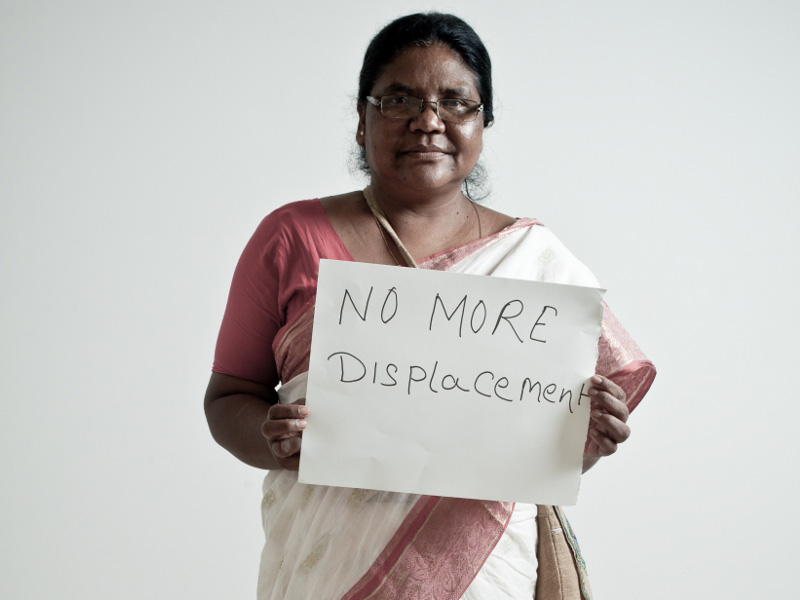 (April 29, 2013). Grassroots Indigenous rights heroes too often go unrecognized. Yet their efforts to promote the rights of their peoples and protect their traditions, languages, and resources are critical to cultural survival. On April 23, 2013 in recognition of her work with Adavasi (Indigenous) communities in India, Dayamani Barla was chosen by Cultural Survival, an Indigenous Peoples rights organization, as the winner of the 2013 Ellen L. Lutz Indigenous Rights Award.